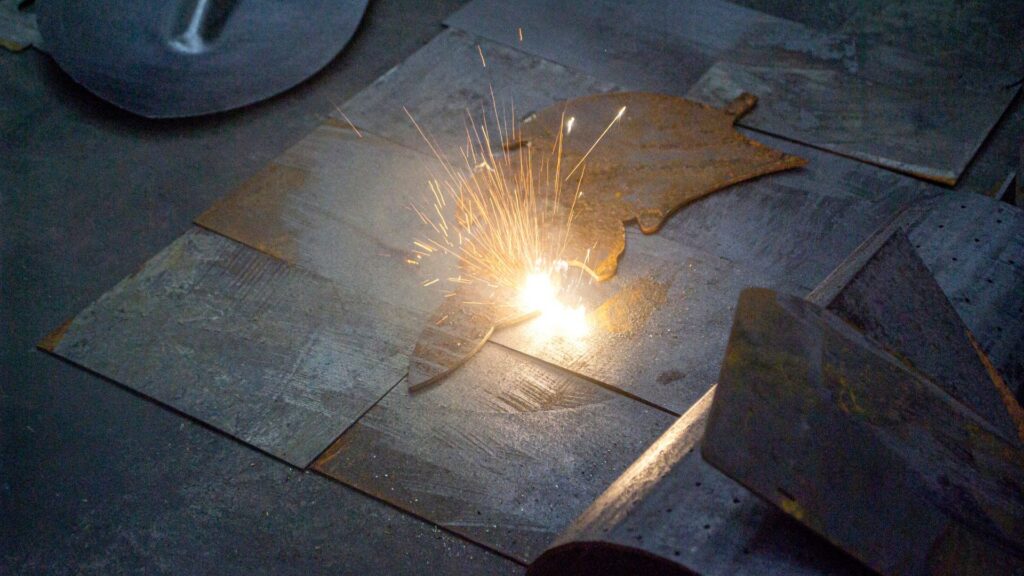
Laser cleaning is an innovative, rapidly developing technology for removing contaminants from the surfaces of metals, plastics, stone, and many other materials—without the use of chemicals, water, or abrasive media. Thanks to a precise beam of light, it is possible to clean even very delicate components effectively, without the risk of damage.
At a time of growing environmental awareness and increasingly strict environmental regulations, more and more companies are looking for alternatives to traditional chemical cleaning methods. Chemical agents, although effective, often pose risks to people, the environment, and equipment. That is why chemical-free cleaning—using a laser—is gaining popularity as a solution that is not only greener, but also more economical and safer.
In this article, you will learn what laser cleaning is, how it works, what its advantages are, and where—and why—it is worth using. You will see that this is not a passing trend, but a real response to the needs of modern industry.
What Is Laser Cleaning?

How does laser cleaning technology work?
Laser cleaning is a modern method of removing contamination from surfaces by using a high-energy beam of light. The process enables precise, controlled cleaning of a wide range of materials—from metals and plastics to delicate stone or ceramic surfaces. Importantly, the entire procedure takes place without water, aggressive chemicals, or abrasive materials, making it non-invasive and environmentally friendly.
Precise contaminant removal without damage
The laser beam works locally and selectively—it is directed only at the contamination, which is removed from the surface through rapid heating and evaporation. As a result, the unwanted layer is eliminated without compromising the structure or geometry of the part. This is why laser cleaning technology works especially well wherever precision and gentleness are critical—both for new surfaces and for the restoration of older or historic components.
Versatility and flexible application
This technique can effectively remove many types of contamination: rust, old paint, layers of oils and technical greases, hard industrial deposits, and even organic dirt. Laser parameters can be adjusted to suit the material type and the level of contamination, making this method exceptionally flexible and safe across a broad range of industrial applications.
Why Avoid Chemicals in Cleaning?
The environmental impact of chemical agents
Traditional cleaning methods often rely on chemicals—aggressive detergents, organic solvents, acids, or alkalis. While they can remove contamination effectively, their use comes with serious drawbacks that are increasingly unacceptable—environmentally, economically, and from a health perspective.
First, chemical cleaning agents often require specialist disposal after use because they can threaten groundwater, soil, and local ecosystems. In many cases they are classified as hazardous waste, and their storage, transport, and neutralization create high costs and administrative burdens. Additionally, chemical cleaning frequently requires large amounts of water—an issue as water costs rise and access becomes more constrained.
Health risks for employees
Equally important is the impact of chemical agents on employee health. Long-term exposure to toxic vapors or liquids may cause skin and eye irritation, respiratory issues, and—in extreme cases—permanent health damage. This necessitates advanced personal protective equipment and strict safety procedures, which extend work time and increase operating costs.
High costs and limited efficiency
From an operational perspective, chemical cleaning is time-consuming and requires workstation preparation, area protection, and surface cleaning and drying after the process. In practice, this means longer production downtime and financial losses. Chemical-free cleaning using laser technology eliminates almost all of these problems—no hazardous waste, fewer health risks, no liquids, and no material degradation.
It is therefore no surprise that companies—especially in industrial manufacturing, automotive, and processing—are increasingly adopting alternative, eco-friendly cleaning methods that are safe, efficient, and more predictable in the long term.
Advantages of Laser Cleaning
Safety and non-invasive action
One of the key advantages of laser cleaning is its fully non-invasive nature. Unlike mechanical or chemical methods, the laser does not physically abrade or chemically attack the surface. The light beam acts selectively, removing only contaminants while preserving the structure and geometry of the part. This makes it ideal for cleaning high-precision machine components, delicate molds, or even historic architectural details. There is no risk of cracking, micro-deformation, or surface damage—common problems with conventional methods.
Eco-friendly, chemical-free cleaning
With sustainability and environmental regulations becoming increasingly important, eliminating chemicals from industrial processes is no longer a trend—it is a necessity. Chemical-free cleaning with a laser meets these demands: the process involves no toxic substances, produces no wastewater, and generates no hazardous waste. No water and no chemicals also mean no need to store, transport, or dispose of them—reducing costs and significantly lowering environmental impact.
Speed and process efficiency
Time is critical in manufacturing, and laser technology saves it. The cleaning process is fast and requires minimal preparation—often without removing the component from the machine. This shortens downtime and allows cleaning to be integrated into standard operating cycles. Moreover, laser cleaning is highly repeatable, ensuring stable quality and reducing the risk of human error.
Lower operating costs
Although a laser cleaning system may seem like a major investment at first, it often pays back quickly. Operating costs are minimal—there is no need to buy chemicals, abrasives, or pay for their disposal. Specialized drainage systems are also unnecessary because the laser does not generate liquid waste. Laser devices typically offer long service life, low failure rates, and simple maintenance—reducing total cost of ownership.
Broad range of applications
Laser cleaning is valued for its wide range of uses. It works across many industries and production environments—from large factories to small restoration workshops. Adjustable operating parameters make it possible to tailor the process to almost any surface type and contamination. This is why laser cleaning technology is used in heavy industry, automotive, aerospace, precision manufacturing, and energy.
Laser Cleaning in Practice

Heavy industry and structural fabrication
In metalworking, steel structure manufacturing, and large-scale production, industrial laser cleaning has become a safe and effective alternative to mechanical and chemical methods. Thanks to high power and precise operation, laser cleaning handles tough contamination such as thick rust layers, old coatings, and mill scale. A major advantage is that parts can often be cleaned without disassembly—mobile laser units can be used on construction sites or directly on the shop floor, saving time and logistics costs. Laser rust removal prepares surfaces for welding, painting, or protective coatings without chemicals or abrasives.
Automotive, aerospace, and precision manufacturing
In automotive and aerospace, precision and repeatability are essential. Laser cleaning is used to prepare surfaces for bonding and welding, remove residual process oils, and clean molds and tools from operating deposits. Because the laser does not alter the material structure, it prevents damage to expensive components or surface deformation. In aerospace, the absence of micro-particles and chemical residues is especially valuable, supporting cleanliness levels required by industry standards. Industrial laser cleaning in these sectors means better control over quality and safety.
Toolrooms and mold production
In injection molds, dies, and precision tooling, surface cleanliness directly affects product quality. Traditional cleaning methods may cause micro-damage or dimensional changes, leading to production issues. Here, laser cleaning of molds and tools is ideal—accurate, fast, and non-invasive. The laser can often clean without removing the mold from the machine, reducing downtime and improving production continuity. It also extends the lifespan of costly tools, lowering overall production costs.
Heritage conservation and restoration
Although often associated with industry, laser cleaning technology is also widely used in the conservation and restoration of artworks, historic architectural details, and heritage objects. The laser enables extremely gentle removal of contamination without damaging stone, brick, or metal. Adjustable beam parameters allow cleaning in stages, precisely revealing the original material texture. Unlike chemical methods, there is no risk of substances penetrating the surface and triggering unwanted reactions. Laser cleaning is now one of the most valued tools in the conservator’s toolkit.
Is It Worth It? Costs and Efficiency
An investment that pays back quickly
While purchasing a laser cleaning system may look like a substantial expense, many companies find it delivers fast, measurable payback. Unlike conventional methods, laser technology does not require ongoing purchases of chemicals or consumables, nor additional filtration or disposal systems. Operating costs are much lower, and day-to-day use is clean, stable, and simple. Total cost of ownership spreads over many years and begins generating savings relatively quickly.
Reduced downtime and higher productivity
One of the biggest hidden costs is production downtime. Traditional cleaning—chemical or mechanical—often requires stopping machines, disassembling components, and time-consuming workstation setup. Chemical-free cleaning with a laser significantly reduces downtime. In many cases, the process can be performed without removing the part, without pre-cleaning, and without drying after completion. That means more productive machine time and fewer delays.
Additionally, thanks to the laser’s precision and repeatability, the cleaning quality becomes predictable. There is no risk of using the wrong chemical, overly aggressive abrasive action, or operator inconsistency. Automated laser systems maintain stable cleaning quality, reducing complaints, rework, and material losses.
Operating savings and long-term value
When you calculate the full cost of cleaning—including materials, labor time, energy consumption, safety, waste disposal, and regulatory compliance—the advantage of laser cleaning technology becomes even clearer. Eliminating chemical purchases and handling is not only a financial saving, but also simpler internal logistics and lower workplace risk.
Moreover, companies using modern, eco-friendly solutions increasingly gain a competitive edge. Laser technology can also be a strong asset in discussions with business partners who value environmental standards, quality, and innovation.
Summary and Recommendation
Why choose laser cleaning?
With rapid industrial change, rising energy and consumables costs, and increasingly strict environmental requirements, companies need solutions that help them operate more efficiently, safely, and responsibly. Laser cleaning fits these needs perfectly—combining modern technology with practical benefits that are noticeable from the first days of implementation.
It eliminates the need for chemicals, minimizes waste, and enables safe, precise work across many surface types. It performs well in large-scale production plants as well as smaller companies that value reliability and versatility. Its proven use in heavy industry, automotive, energy, toolmaking, and conservation confirms its broad potential.
Companies choosing chemical-free cleaning not only optimize costs, but also improve working conditions, meet sustainability requirements, and build a modern, responsible brand image. By implementing laser cleaning technology, you gain a technological advantage and move to a higher level of operational efficiency.
If you want a solution that combines ecology with real savings and high effectiveness, laser cleaning is the right step.
Want to see how this technology could work in your facility? Contact us—we will advise you, select the right solution, and help you implement the cleaning of the future today.